The strongest Synthesia alternatives are HeyGen for marketing and multilingual clips, Colossyan for SCORM-based training, AI Studios for mixed avatar and dubbing work, Elai.io for small budgets, and Vyond when animation beats avatars.
Why marketers and L&D teams go looking for Synthesia alternatives
Teams rarely leave because the avatars look wrong. They leave because of a ceiling. The ceiling is usually minutes, seats, or the cost of adding a second language track to a course that already shipped.
Synthesia’s free Basic plan includes only 10 minutes of video creation or dubbing, and those videos carry a Synthesia watermark, according to Synthesia’s pricing page. That is enough to prove the concept to a director. It is not enough to run a monthly product-update series or a 12-module onboarding path.
The second ceiling is volume. Synthesia’s help center states that unlimited video minutes are available only on the Enterprise plan, not on the self-serve tiers. If your L&D calendar is lumpy — quiet in July, then 40 compliance modules in September — a per-minute cap forces you to either over-buy annually or negotiate a contract you did not plan for.
The third trigger is workflow. Marketing wants vertical cuts and fast reshoots; L&D wants SCORM packages, quiz branching and version control. One tool rarely sits perfectly in both lanes, which is why the shortlist below splits by job rather than by brand loyalty.
How we compared these tools (minutes, avatars, languages, SCORM, price)
This comparison is desk research, current as of October 2026 — published pricing pages, vendor help documentation, and third-party pricing breakdowns from Anam and G2, plus the pricing guide "HeyGen Pricing 2026: Plans, Credits & The Real Cost Explained." Nothing here was filmed, rendered or lip-sync tested by our team.
Five criteria decided the shortlist:
- Minutes per month — how much finished avatar video a mid-tier plan actually allows.
- Avatars — stock library size and whether custom avatars are included rather than quoted.
- Languages and dubbing — voice coverage for localized versions of the same script.
- SCORM or LMS export — whether training video can be packaged for Cornerstone, Docebo or Moodle without a middleman.
- Price in comparable units — per month, per seat, per minute or per credit, as published.
What we could not check: render quality on your brand’s specific faces, enterprise discount levels, support response times, and how each platform handles a legal review of cloned likenesses. Those need a trial with your own script.
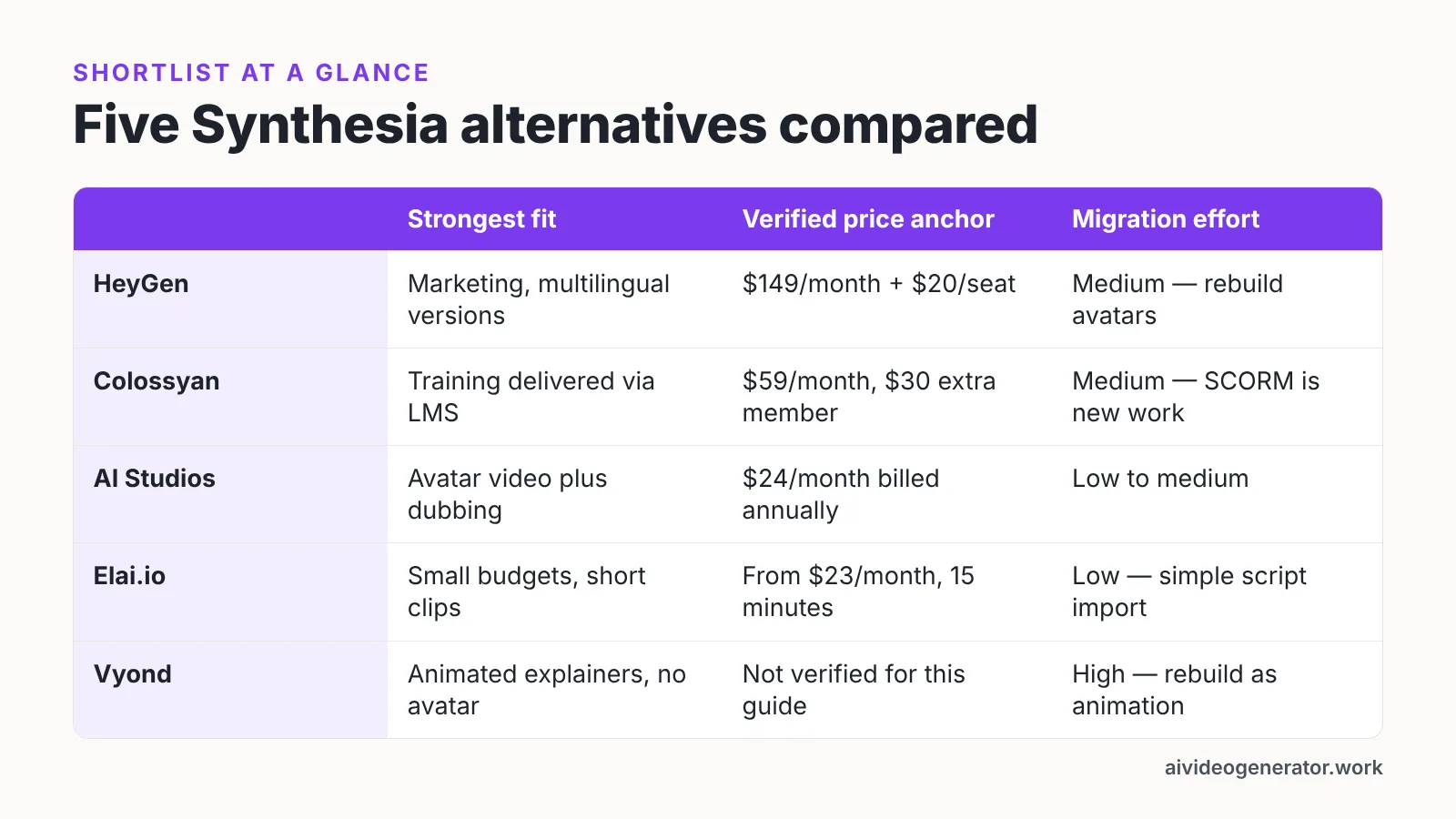
| Tool | Strongest fit | Verified price anchor | Migration effort from Synthesia |
|---|---|---|---|
| HeyGen | Marketing, social cuts, multilingual versions | Business tier $149/month + $20/seat (HeyGen Pricing 2026: Plans, Credits & The Real Cost Explained) | Medium — rebuild avatars, relearn credit math |
| Colossyan | Corporate training delivered through an LMS | Professional $59/month, $30 per extra member (Colossyan) | Medium — scripts transfer, SCORM setup is new work |
| AI Studios | Avatar video plus dubbing in one workspace | Personal $24/month billed annually (AI Studios) | Low to medium — script-first workflow |
| Elai.io | Small budgets, short explainer clips | Basic from $23/month with 15 video minutes (G2) | Low — simple script import |
| Vyond | Animated explainers where no avatar is needed | Not verified for this guide | High — rebuild as animation, not avatar video |
1. HeyGen
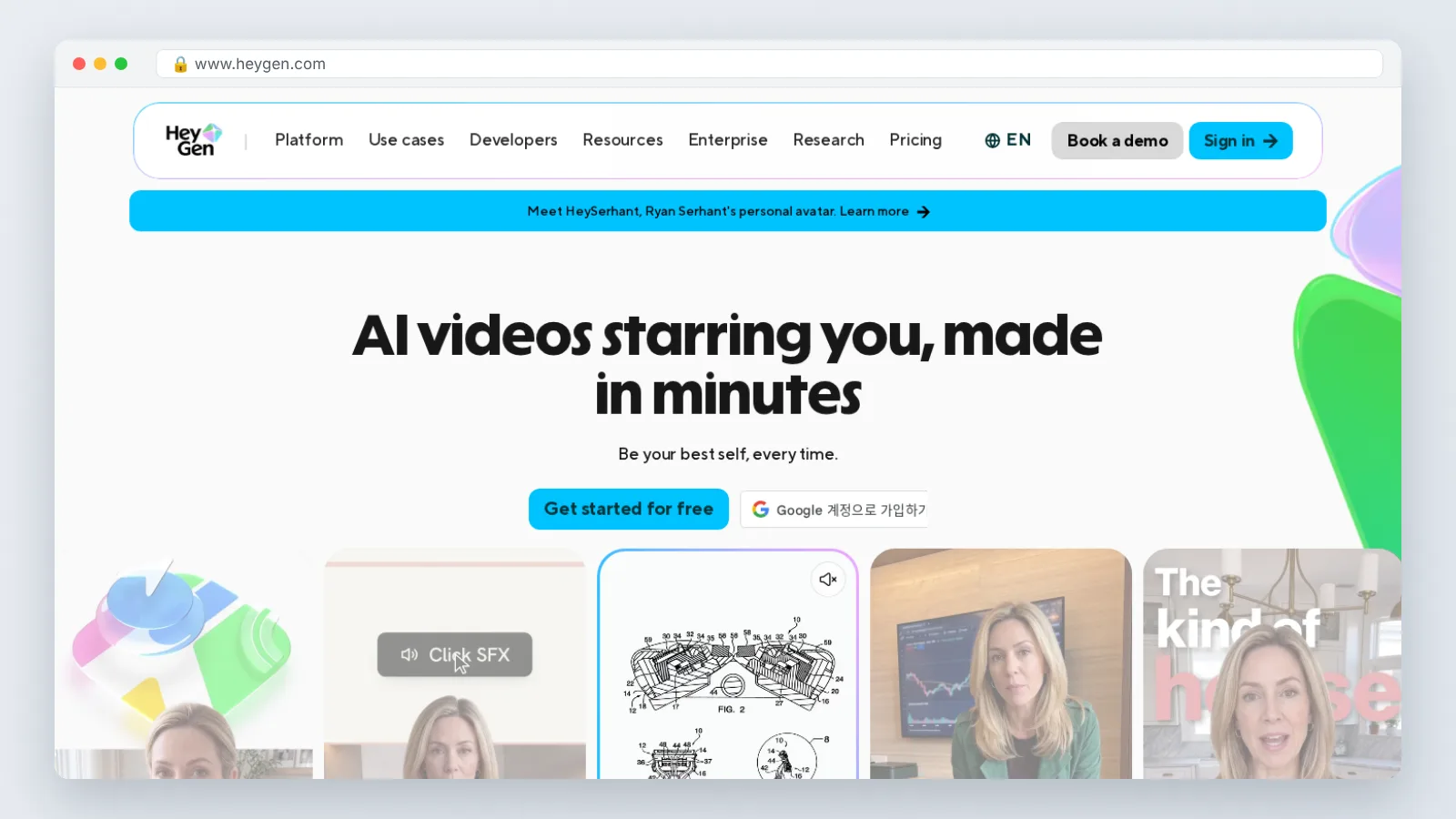
HeyGen is the closest like-for-like swap if your output is marketing video: launch clips, paid social variants, localized versions of the same 45-second script. The editing model will feel familiar to anyone who has shipped a Synthesia scene.
Price depends on which avatar model you pick, not just which plan you buy. HeyGen’s credit system charges 3 credits per minute for Avatar III video but 20 credits per minute for its higher-end Avatar IV and Avatar V models, according to Anam’s HeyGen pricing guide. That gap is the single most important number to model before you commit a quarterly budget.
For teams that also need training delivery, HeyGen’s Business tier is listed at $149 per month plus $20/seat, with 1,500 credits a month and SCORM support, according to "HeyGen Pricing 2026: Plans, Credits & The Real Cost Explained."
Migration effort is medium. Scripts and storyboards move in an afternoon. Custom avatars have to be recorded and approved again, brand kits rebuilt, and your per-video cost re-forecast around credits rather than minutes — budget a week of parallel running before you cancel anything.
2. Colossyan
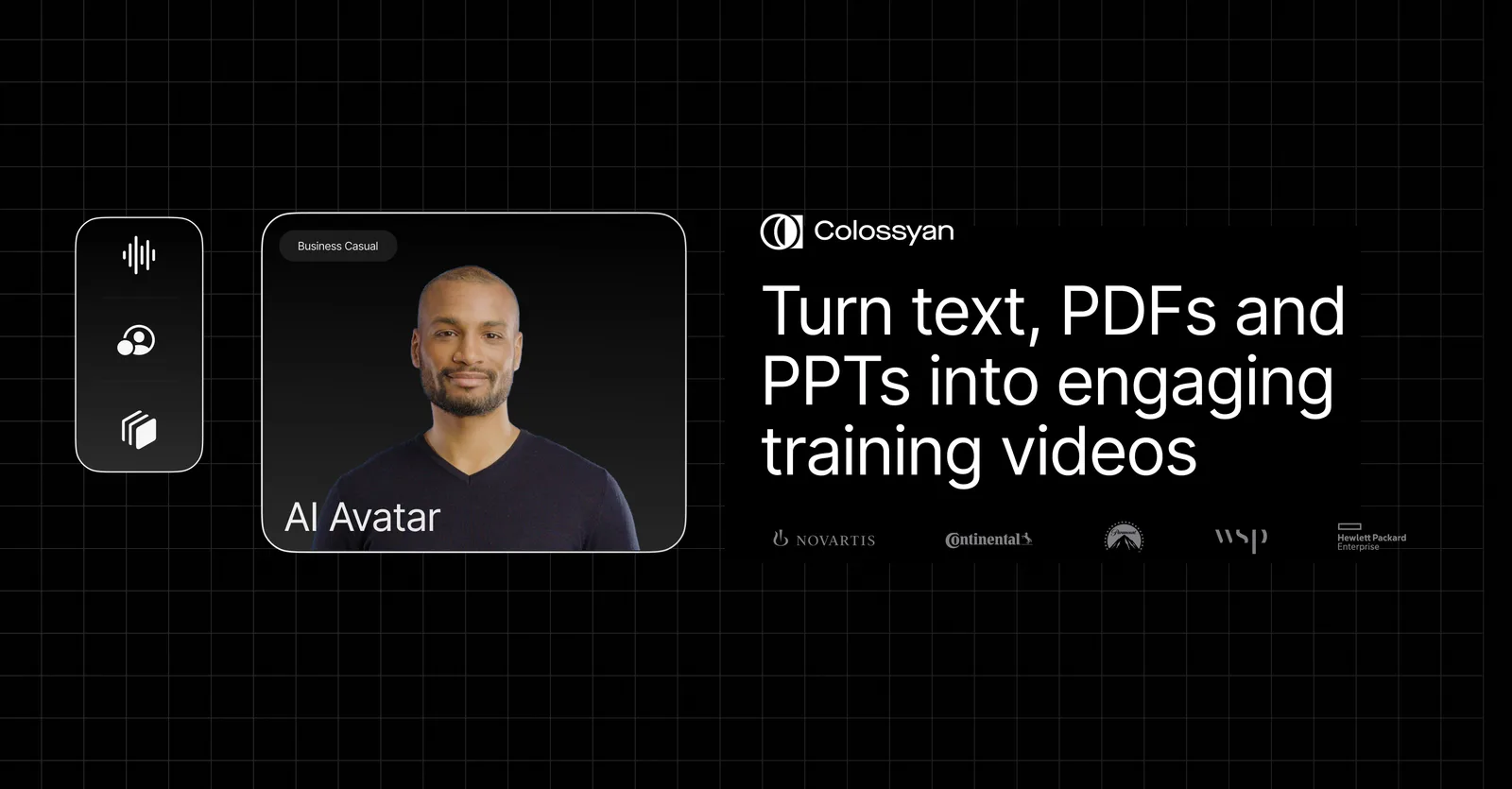
Colossyan is built around workplace learning, and its packaging shows it. If your deliverable ends in an LMS rather than on YouTube, start here.
Colossyan’s Professional plan costs $59 per month, with each additional team member charged $30 per month, according to Colossyan’s pricing page. Seat pricing matters for L&D teams where a subject-matter expert only logs in twice a quarter — count your real editors, not your stakeholders.
Check the minute caps against your course calendar before signing. Colossyan’s Professional plan caps avatar video at 30 minutes per month with NEO plus 10 minutes per month with NEO2, per Colossyan’s pricing page. A single 20-minute compliance module eats most of that in one go.
The LMS path is the reason to choose it: Colossyan’s Professional plan includes 5 streaming SCORM exports per month for pushing AI videos into an LMS, according to Colossyan’s pricing page.
Migration is medium effort. Scenario-style scripts transfer cleanly, but your first SCORM package will need a test upload, a completion-tracking check and a browser test on the devices your frontline staff actually use.
3. DeepBrain AI (AI Studios)
AI Studios is DeepBrain AI’s cloud-based platform for creating AI avatar videos, text-to-video content and video translations. It fits teams whose work is split between making new avatar videos and re-voicing footage they already own.
The workspace bundles avatar video creation, text-to-video, dubbing, text-to-speech and generative AI tools in one place, which cuts the handoff between your editor and whoever owns localization. Language coverage is the practical draw: text-to-speech voiceovers are available in 150+ languages and accents on paid plans and in 30+ languages on the Free plan, and the platform offers more than 1,000 AI voices, according to AI Studios’ pricing page.
Entry pricing is low for a tool with custom avatars. The Personal plan is listed at $24 per month when billed annually and includes unlimited AI videos up to 30 minutes each, 1080p export, 3 custom avatars, 120 minutes of AI dubbing per month and 60 generative credits per month, per the same pricing page. The free tier on DeepBrain AI’s AI Studios platform costs $0 and allows up to 3 AI videos of up to 1 minute each in 720p, with 16 one-time generative credits.
One limitation: SCORM packaging is not part of the published plan comparison, so if your videos must land in an LMS as trackable objects, Colossyan’s streaming SCORM exports or HeyGen’s Business tier are the better-documented routes. Note also that AI Studios by DeepBrain AI is a video-creation SaaS, unrelated to Google AI Studio, which is a developer tool for testing language models — a naming clash that confuses procurement teams regularly. The company behind it is headquartered in Seoul, South Korea, with additional offices in Silicon Valley and Beijing.
4. Elai.io
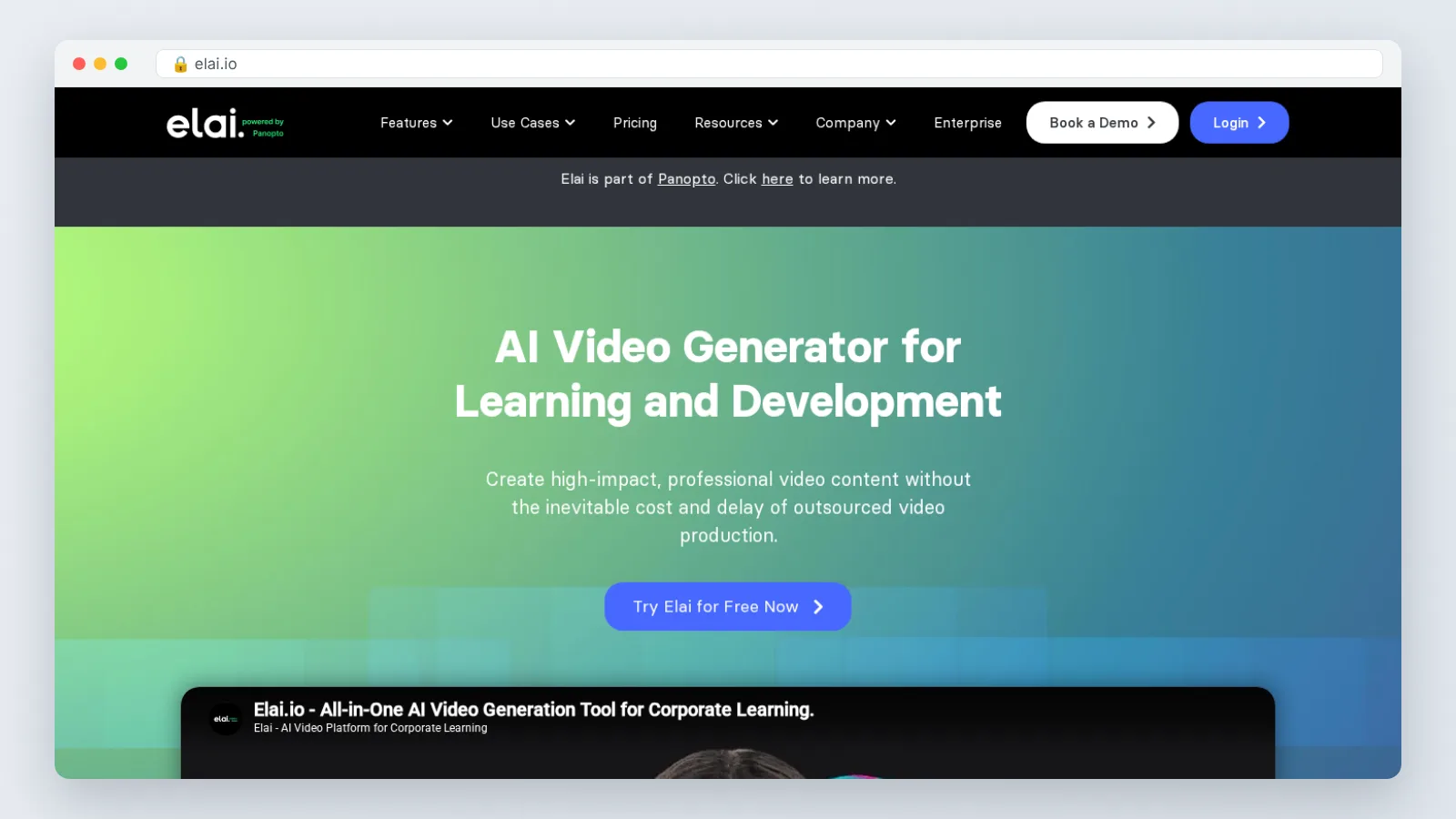
Elai.io is the budget entry on this list, and it suits a specific reader: a solo marketer or a two-person internal comms team producing short clips, not a 30-module curriculum.
Elai.io’s entry Basic plan starts at $23 per month and includes 15 video minutes per month, according to G2’s 2026 pricing listing for Elai.io. Fifteen minutes is roughly one weekly two-minute update with room for reshoots. Treat it as a pilot budget rather than a production line.
The decision here is less about features and more about risk. A low monthly commitment lets you test whether avatar video actually moves your metrics — course completion, email click-through, demo requests — before you argue for a four-figure annual plan.
Migration is the easiest of the five. Scripts paste in, scenes are short, and nothing in a 15-minute monthly allowance is heavy enough to make a rollback painful. Verify the avatar roster and language list against your own requirements before you cancel an existing subscription, since those details change between plan tiers.
5. Vyond
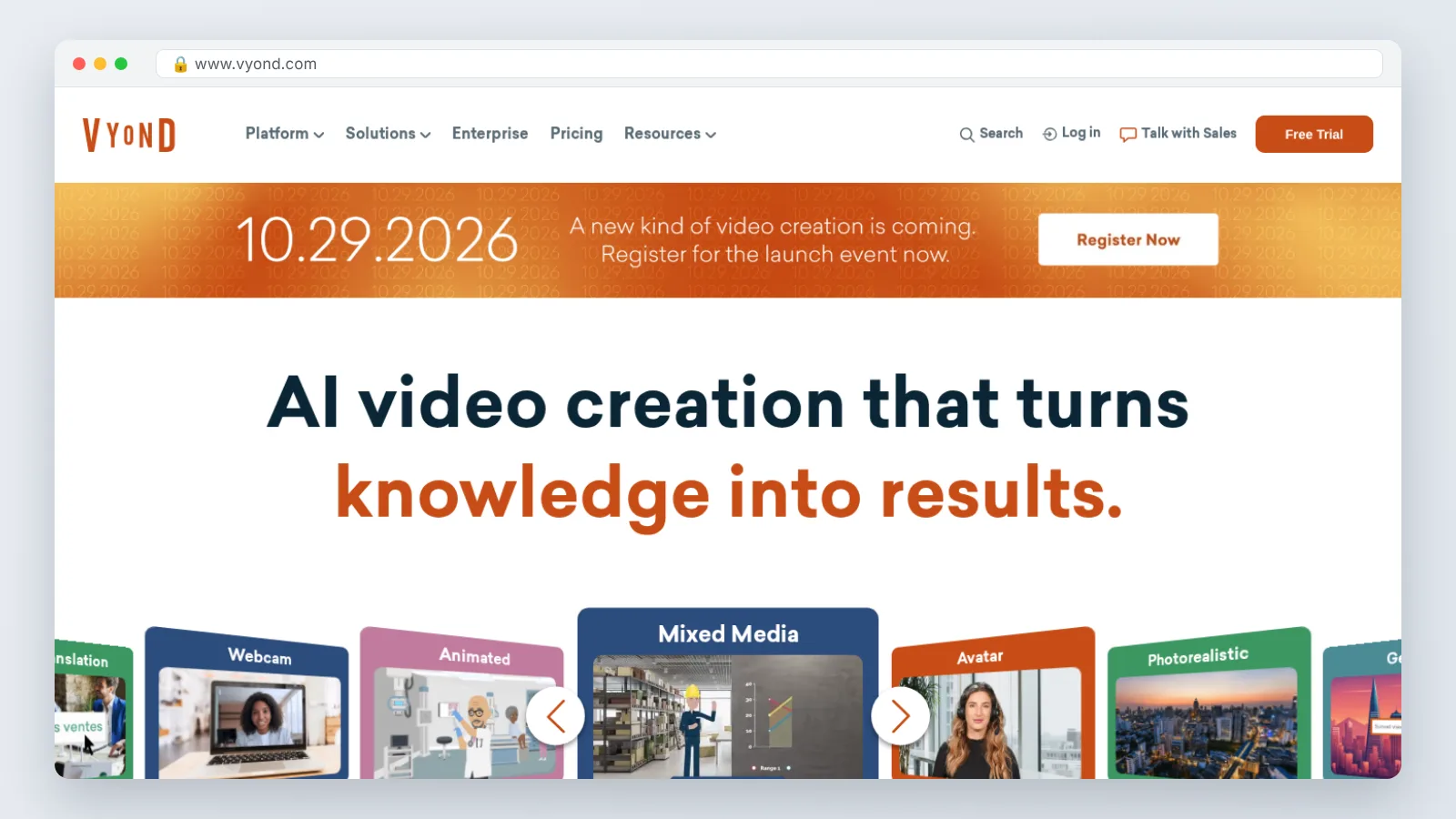
Vyond belongs on this list as the non-avatar option. Some training content is better served by animated characters and scenes than by a photoreal presenter — safety procedures, abstract processes, anything where showing a workflow beats showing a face.
This is a different production model, so treat it as a replacement for a job rather than for a tool. Storyboards matter more than scripts, and a single two-minute animated explainer takes longer to assemble than the same script read by an avatar.
We did not verify Vyond’s current pricing, seat structure or SCORM support from a source that met our evidence bar, so confirm those directly with the vendor before you build a business case. That gap is deliberate; we would rather flag it than guess.
Migration effort is the highest here. Nothing from a Synthesia project moves across except the script and the learning objectives, and your team needs animation instincts — timing, camera moves, character staging — that avatar tools let you skip entirely.
When to stay with the original
Switching costs more than the subscription difference. Rebuilt avatars, retrained editors, new review cycles and a fresh legal pass on likeness consent can swallow a year of savings.
Stay put if your library already runs on Synthesia templates and your usage sits comfortably inside your plan. Synthesia’s Pro plan is listed at $89 per month billed monthly and includes 6,000 credits per month, according to Synthesia’s pricing page — for a team shipping a handful of videos a month, that is rarely the line item worth fighting over.
Avatar variety is another reason to hold. Synthesia’s Starter tier gives access to 125+ stock AI avatars and 3 guest seats, per its pricing page, which covers most internal communications needs without recording anyone on your staff.
Run this test before you move: list the three things your current tool cannot do, and check whether any shortlisted alternative fixes all three. One fix out of three is not a migration case, it is a feature request.
Which alternative fits your use case: a quick decision checklist
Work through these in order and stop at the first match.
- Your videos must land in an LMS with completion tracking. Choose Colossyan — its Professional plan includes 5 streaming SCORM exports per month, per Colossyan’s pricing page.
- You publish marketing video weekly in several languages and need seats for a wider team. Choose HeyGen, and model your cost against the 3-versus-20 credits-per-minute gap between Avatar III and Avatar IV or V reported by Anam.
- You split your time between new avatar videos and dubbing existing footage. Choose AI Studios, where paid plans cover 150+ languages and accents for text-to-speech, per its pricing page.
- You have under $30 a month and want proof before a bigger commitment. Choose Elai.io, whose Basic plan starts at $23 per month with 15 video minutes, according to G2.
- Your content works better as animation than as a talking presenter. Choose Vyond, and confirm pricing and LMS support with the vendor directly.
- None of the above describes a real blocker. Stay where you are and renegotiate at renewal.
One practical rule for any move: run both tools in parallel for one full production cycle. Ship the same script in each, send both to the same five reviewers, and compare revision rounds rather than render quality alone. That comparison tells you more than any feature grid, including this one.
Frequently asked questions
Is there a genuinely free Synthesia alternative?
AI Studios’ Free plan costs $0 and allows up to 3 AI videos of up to 1 minute each, exported in 720p with 16 one-time generative credits, according to its pricing page. For comparison, Synthesia’s free Basic plan includes 10 minutes of video creation or dubbing, and videos carry a Synthesia watermark.
Which Synthesia alternative is best for SCORM and LMS delivery?
Colossyan has the clearest documented path: its Professional plan at $59 per month includes 5 streaming SCORM exports per month, per Colossyan’s pricing page. HeyGen’s Business tier, listed at $149 per month plus $20/seat with SCORM support in "HeyGen Pricing 2026: Plans, Credits & The Real Cost Explained," suits larger teams that also publish marketing video.
How do I compare HeyGen’s cost against Synthesia’s?
Convert both to the unit you actually consume. HeyGen charges 3 credits per minute for Avatar III and 20 credits per minute for Avatar IV and Avatar V, according to Anam, while Synthesia’s Pro plan is listed at $89 per month with 6,000 credits, per its pricing page. Model a typical month of scripts against both.
Will my existing Synthesia scripts and projects transfer?
Scripts, voiceover text and storyboards move easily since they are plain text, but no tool on this list imports finished Synthesia projects. Expect to rebuild brand templates, re-record custom avatars with fresh consent paperwork, and re-time scene transitions by hand during your first two or three videos.
How many languages do these alternatives cover?
Language coverage is published per plan tier rather than per vendor, so check the exact tier you intend to buy instead of the headline figure on a marketing page. We could not verify like-for-like language counts across all five tools from sources that met our evidence bar. Always test your two highest-priority languages with a real script — listening for names, numbers and product terms — before committing to an annual plan.
Sources
Written with AI assistance and fact-checked against the sources cited above before the AI Video Generator Editorial Team published it.